
Explore Meeting Rooms in Copenhagen
#Kuglegården
Course/Workshop/Meeting: Up to 64 participants
Lecture/Event: Up to 81 people
You are now entering the room we’ve named “Kuglegården.” But technically, Kuglegården refers to the rectangular courtyard visible behind the room. From 1741 until 2017, the Danish Navy stored all their cannonballs in the buildings and the courtyard – until it was renovated by the company Mogens de Linde (and we moved in in 2025).
On one of the courtyard walls grows a special grapevine, propagated from a cutting brought from Madeira by sailors a couple of hundred years ago. A few years later, all its ancestors on Madeira died due to a plant disease, and this vine became the source of new generations of grapevines on the island. Pretty impressive, right?
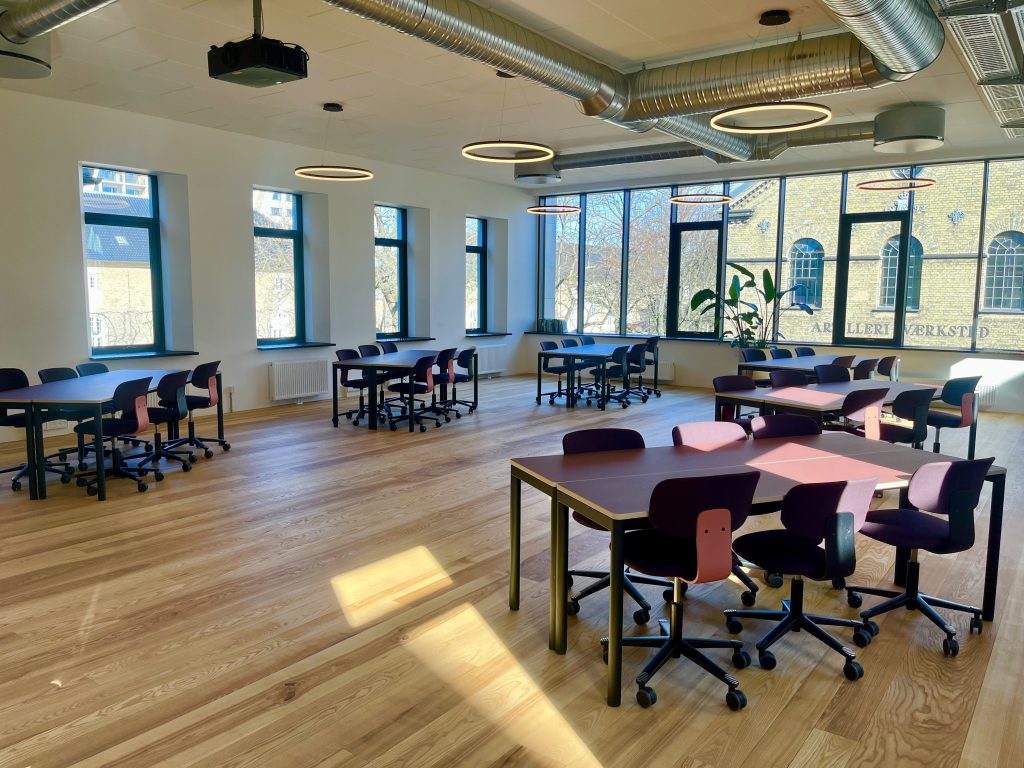
#Kongeporten
Course/Workshop/Meeting: Up to 37 participants
Lecture/Event: Up to 55 people
You are now entering the room we’ve named “Kongeporten.” But technically, Kongeporten is the majestic entrance to Kuglegården, of which this building is a part. Kongeporten was built in 1744, and atop it stands a statue of King Christian VI.
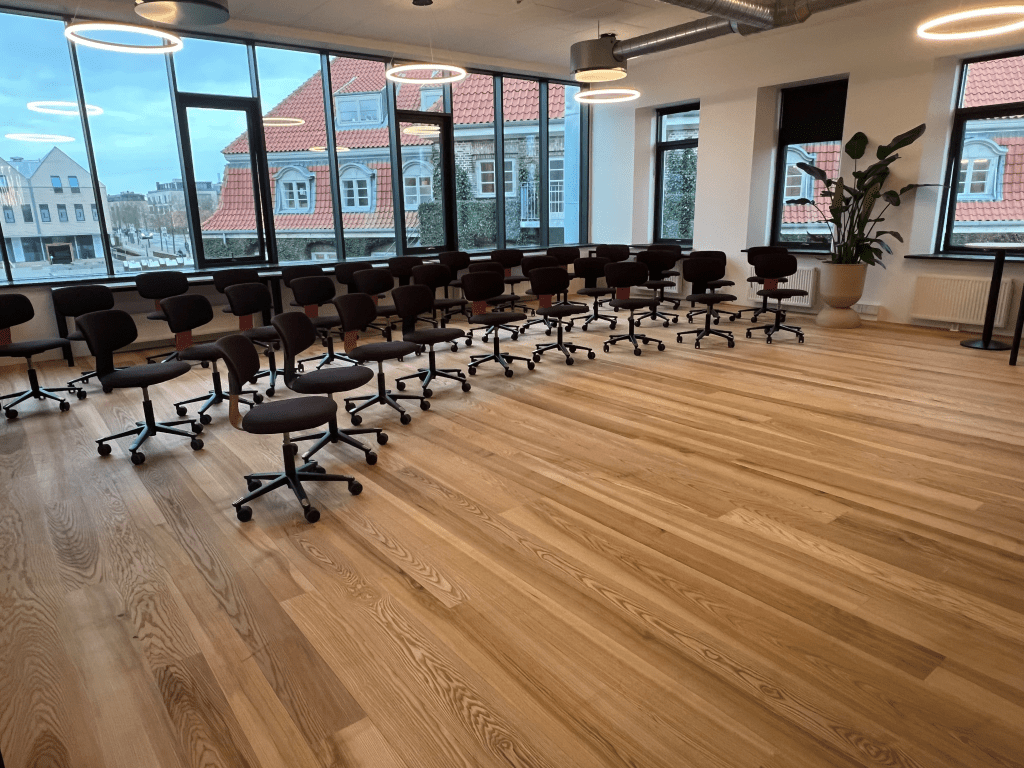
#Holmen
Course/Workshop/Meeting: Up to 22 participants
Lecture/Event: Up to 41 people
You are now entering the room we’ve named “Holmen.” But as you probably know, Holmen is the small, fashionable group of islands in Copenhagen where we are located. Here you’ll find the Opera, the Royal Danish Academy, Broens Street Kitchen, and much more. Originally, this area was used by the Danish Navy.
This is where they built and maintained warships, and right here in the area where we are now, the Danish Navy stored all their cannonballs from 1741 onward.

#Trangraven
Course/Workshop/Meeting: Up to 16 participants
Lecture/Event: Up to 26 people
You are now entering the room we’ve named “Trangraven” – and there’s a very good reason for it. When you look out the windows, you’ll see Trangraven, the waterway where houseboats and picnic boats float today.
Four hundred years ago, it was actually open sea. But shortly thereafter, Arsenal Island – where we are located – was built, leaving a small strip of water that became Trangraven.
Trangraven was used as a docking spot for boats bringing whale oil to Copenhagen from Iceland, the Faroe Islands, and Greenland. Whale oil was used to fuel lamps (before 220-volt electricity became standard), lighting up Copenhagen in the evenings.

#arsenaløen
Course/Workshop/Meeting: Up to 14 participants
Lecture/Event: Up to 21 participants
Welcome to the room we call “Arsenal Island”. Actually, the name refers to the entire island we are on. Back in 1742, there wasn’t really an island here at all—the seabed was home to cod, plaice, and… well, probably not bicycles just yet! Arsenal Island became the place where the navy stored ammunition and cannons for its warships. Even today, you can spot some of the old cannons and cannonballs on the lawn in the courtyard.
